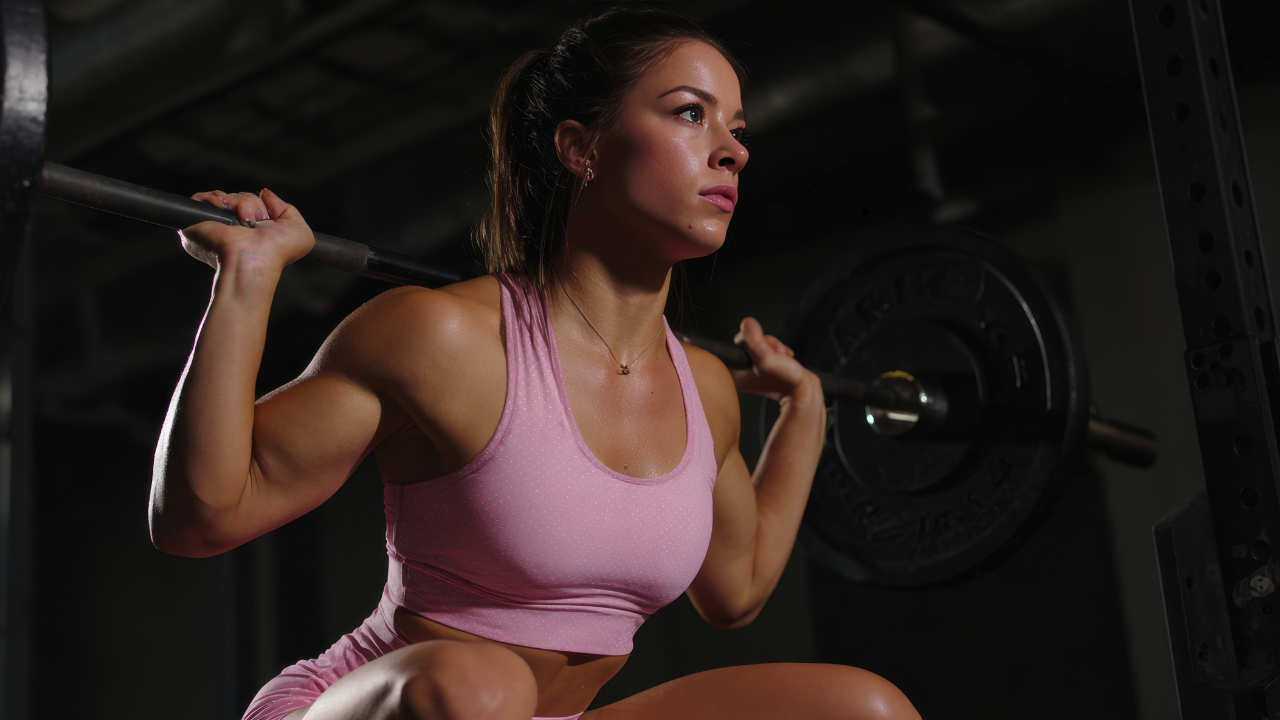
Building Confidence on the Barbell: Overcoming Fear of Heavy Weights
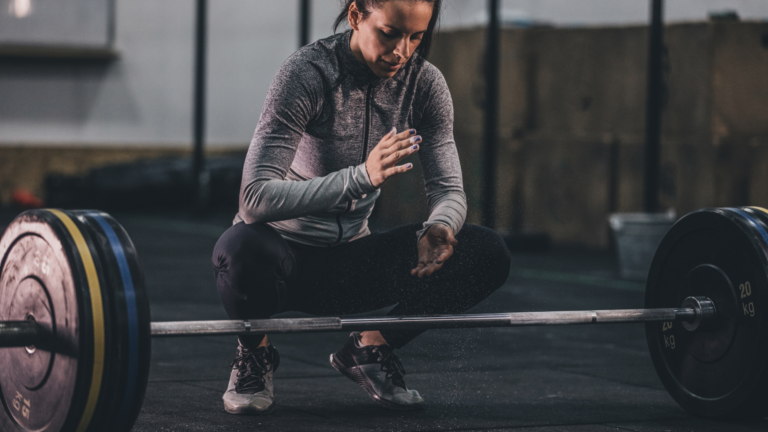
I’ll never forget the first time I loaded 100 pounds on a barbell for a squat clean. My hands were shaking as I chalked up, and I must have psyched myself out three times before actually cleaning it. That weight felt impossibly heavy—not just physically, but mentally.
Fast forward to today, and heavy lifting has become one of my favorite parts of training. But that shift didn’t happen overnight, and it certainly didn’t happen because I just “got stronger.” It happened because I learned how to build confidence alongside strength.
If you’ve ever felt intimidated by heavy weights, talked yourself out of adding plates to the bar, or watched other women lift confidently while you second-guessed yourself, this one’s for you.
Why Heavy Weights Feel So Intimidating
Let’s be real about what’s happening here. For many of us, our fear of heavy weights isn’t actually about the weight itself—it’s about everything wrapped around it.
The mental load is real. You’re not just lifting the barbell; you’re lifting years of messaging that told you to “tone” instead of build strength, that being strong meant being bulky, or that the barbell area was reserved for men. Even if you intellectually know those messages are garbage, they still take up space in your head when you’re standing in front of a loaded bar.
Failure feels public. Missing a lift in a CrossFit class means everyone sees it. And for those of us who were taught to be perfect, polite, and not take up space, that visibility can feel excruciating.
The stakes feel higher. Heavy weights demand respect. They require technical precision, and yes, there’s an element of risk if your form breaks down. That’s not irrational fear- it’s your nervous system doing its job. The key is learning to work with that awareness instead of letting it paralyze you.
The Foundation: Technique Over Ego
Here’s what I learned after 13+ years in this sport: confidence on the barbell starts with trusting your technique, not your max numbers.
When you know- really know- that your positions are solid, that you can maintain tension through your midline, and that you understand the mechanics of the lift, the weight becomes secondary. You’re not guessing anymore. You’re executing a movement pattern you’ve practiced hundreds of times.
This is why I’m relentless about drilling positions with my athletes. It’s not sexy work. Nobody’s posting their empty barbell work on Instagram. But those reps build the neural pathways that let you stay calm under a heavy bar.
Start here: Pick one barbell movement you want to improve. Spend the next four weeks doing technique work at 50-60% of your max twice a week. Film yourself. Get coaching. Build perfection at lighter loads before you chase heavy ones.
Progressive Overload Is Your Best Friend
One of the biggest mistakes I see women make is making tiny jumps when they’re lifting at light weights, unsure of how to progress- compounded by not knowing what their maxes are (it’s why we tell you to LOG YOUR SCORES!).
That’s not a strength problem. That’s a progression problem.
I see this all the time: a woman with a 150-pound back squat max will come into the gym, hit 55 pounds, feel good, add to 65, maybe 75 if she’s feeling brave, and call it a day. She’s working at like 40% of her capacity because she doesn’t actually know what her max is, so she has no framework for what weight she should be lifting.
Meanwhile, she’s wondering why she’s not getting stronger. You can’t build strength at weights that don’t challenge you.
Here’s what changes everything: Know your numbers, then build a real plan around them.
Try this approach:
First, if you don’t know your current max, find it. Test it. Write it down. Put it in your phone. That number is your baseline—without it, you’re just guessing.
Let’s say you discover your back squat max is actually 150 pounds. Now pick a target that’s 10-15 pounds heavier- maybe 165 pounds in 12 weeks.
Now work backwards from that target:
- Week 1-2: 70% of target (115 pounds for 5×5)
- Week 3-4: 75% of target (125 pounds for 4×5)
- Week 5-6: 80% of target (130 pounds for 3×5)
- Week 7-8: 85% of target (140 pounds for 5×3)
- Week 9-10: 90% of target (150 pounds for 3×3)
- Week 11: Deload at 60-65% of target
- Week 12: Test your target weight
See the difference? Instead of randomly hitting 65 pounds and hoping for the best, you’re walking into the gym knowing you need to hit 115 for your working sets. That’s an actual training stimulus. That’s weight that will make you stronger.
This approach takes the guesswork and fear out of loading the bar. You’re not wondering “is this too much?” You know exactly what you’re supposed to lift because it’s calculated from a real goal.
And when you hit that 165-pound max in week 12? Pick 180 and run it again.
Reframe Failure as Feedback
I’ve missed more lifts than I can count. Heavy cleans that never made it past my knees. Snatches that I dropped behind me. Front squats where I literally bailed out of the bottom.
Every single one taught me something.
The lift where I missed because I didn’t commit to getting under the bar quickly enough? That taught me I needed to work on my speed. The front squat I failed because my chest collapsed? That showed me it was time to commit to thoracic strength work.
Missing a lift doesn’t mean you’re weak. It means you found the edge of your current capacity, and now you have information about what to work on.
Mindset shift: Instead of “I failed that lift,” try “That lift showed me I need to work on [specific technical element].” It’s not toxic positivity- it’s treating your training like the learning process it actually is.
Build Your Pre-Lift Ritual
Watch any elite lifter and you’ll notice they do the same thing every single time before they touch the bar. Same chalk routine. Same approach. Same breath pattern.
That’s not superstition. That’s nervous system regulation.
Your pre-lift ritual is how you tell your body, “We’ve done this before. We know what to do.” It creates consistency and calm in a moment that could otherwise feel chaotic.
My ritual for heavy lifts:
- Chalk hands while visualizing the lift successfully (you know I’m chalking even for squats lol)
- Three deep belly breaths
- Walk to the bar with intention
- Set my feet, set my hands
- One more breath to brace
- Lift
Find what works for you and repeat it religiously. Over time, that ritual becomes the on-switch for your confidence.
The Power of Strong Women Around You
I cannot overstate how much my confidence grew when I started training around women who lifted heavy without apology.
When you see another woman load 185 on the bar for back squats and attack it like it’s nothing, something shifts. Not because you’re comparing yourself to her, but because you’re expanding what you believe is possible.
This is one of the reasons I love coaching at CrossFit 1904 and why the Women of CrossFit community matters so much. When you’re surrounded by women pursuing strength at every level, the barbell stops feeling like foreign territory and starts feeling like home.
Action step: Find your people. Whether that’s a strength-focused class, a lifting partner, or an online community (like OURS!), surround yourself with women who treat heavy weights as normal, achievable, and worth pursuing.
Fuel Your Strength (Seriously)
I’d be failing you if I didn’t mention this: you cannot build confidence on the barbell if you’re chronically underfueling.
Your nervous system needs adequate carbohydrates to fire properly. Your muscles need protein to recover and adapt. Your brain needs to trust that you have enough energy to perform under load.
If you’re restricting calories, skipping carbs, or stuck in diet culture’s “eat less, move more” mentality, your body is going to protect you from heavy weights by keeping you tentative. That’s not a mindset problem- that’s a physiology problem.
Fuel like an athlete who’s building strength, and watch your confidence follow.
Start Where You Are
Maybe you’re reading this thinking, “That’s great, but I’m nowhere near lifting heavy weights.”
Here’s the truth: heavy is relative.
The barbell that feels heavy to you today is building the foundation for the barbell that will feel heavy to you a year from now. There’s no finish line where you suddenly “arrive” at confident. You build it rep by rep, session by session, increment by increment.
I still get nervous before max effort lifts. After 13 years. But now I know that nervous energy is just my body getting ready to do something hard- and I’ve done hard things before.
You can too.
This week’s challenge: Pick one barbell lift. Add 5 pounds to your working weight. Practice your pre-lift ritual. Film it. Celebrate it.
Then do it again next week.
That’s how confidence gets built. Not in one dramatic moment, but in a hundred small ones where you chose to trust yourself under the bar.
What’s your biggest mental block when it comes to lifting heavy? Drop it in the comments—I’d love to hear what you’re working through.